

3EA E-Cubed
Understanding Children’s Holistic Development, Program Implementation, and Effectiveness in Context:
Evidence to Guide Investments in Social Emotional Learning
[2016-2023]
Project Overview
The 3EA E-Cubed project examined children’s holistic learning and development as well as program implementation in three crisis-affected contexts.
-
Evidence-based guidance is critical for stakeholders to make informed decisions on investment and policy, as well as on program design and implementation to improve children's academic and social-emotional learning (SEL) for children affected by conflict and crisis. 3EA E^3 project, titled "Understanding Children’s Holistic Development, Program Implementation, and Effectiveness in Context: Evidence to Guide Investments in Social Emotional Learning" set out to provide such guidance based on rigorous research conducted in three contexts: with Syrian refugee children in Lebanon, Nigerian refugee and Nigerian host-country children in Niger affected by Boko Haram attacks, and children in post-ebola Sierra Leone.
This project leveraged the data collected for the Education in Emergencies, Evidence for Action (3EA) Impact Initiative, which evaluated impacts of remedial education and social and emotional learning (SEL) interventions with more than 17,000 children in partnership with the International Rescue Committee. With the 3EA data, and funded by the E-Cubed research envelope, we were able to examine how SEL programming supported children’s holistic learning and development, in what conditions and for whom.
-
This project extended our current knowledge from the outcomes in 3EA by examining three primary questions:
What is normative and adaptive for children’s learning and development in three crisis-affected contexts with unique cultures and conditions?
How do implementation factors, such as dosage and quality of SEL practices and programs, affect intended results?
Does the impact of SEL programming vary according to the level of children’s exposure to adversity?
In addressing these questions, we explored what children’s learning and development looked like under conditions of extreme adversity and in diverse socio-cultural settings. We also investigated how to best support children’s holistic learning and development in such settings.
Our hope for the findings of this study were that they be used and communicated to (a) catalyze investment in education programming and research; (b) increase public awareness on the importance of education; (c) build robust evidence base for supporting education and child development; and (d) improve design and implementation of academic and SEL programming for children affected by conflict and crisis.
-
In this project, we generate, collectively interpret, clearly communicate evidence about the implementation of SEL strategies and children’s academic, cognitive, and social-emotional development. The resulting work not only informs the design of culturally-grounded SEL programs that are more impactful, easily implemented, and targeted than prevailing methods, but also to support evidence-informed investment and policy decisions.
Featured News & Publications

The purpose of this product is to summarize and showcase the achievements on communication of the evidence and lessons learned from the 3EA E-Cubed project. In sum, we generated 59 total communications products across 12 different formats targeting diverse audiences. These products are presented in 12 different formats, to cater to these diverse audiences and maximize the reach and impact, ranging from academic journals, policy briefs, and datasets to press releases, blogs, webinars, interactive online tools, and more.

Science is the most useful when it catalyzes change. In this tool, we provide actionable recommendations and guidance on how to best support education in emergencies, to get the evidence into the capable hands of the education stakeholders.

The recent earthquakes in Turkey and Syria hit an already war-torn region and populations in the Middle East. They have left lasting psychological and physical trauma for 8.8 million affected people in Northern Syria alone–a region where 4.1 million people already depend on humanitarian assistance. While immediate emergency responses are essential, once the initial crises pass, children impacted by conflict and crises still need to grow up and learn, coping with painful memories and unpredictable and often hostile environments. They deserve and need support that can help them to navigate the adversities on their own. Unfortunately, the disruptions in the aftermath of crises can exacerbate the emotional and psychological toll on children, affecting their physical and emotional well-being, learning and development over the long term.

Key messages for researchers and practitioners:Key messages for researchers and practitioners:
When studying brief and skill-targeted social-emotional learning activities, consider calculating measures of dosage: how much (quantity), how often (repetition pattern), and for how long (duration) the activities are implemented. Examine these measures as potential predictors of program outcomes or moderators of the program impact; and use the information to determine the “optimal dosage” when scaling up.
Link these measures with teachers’ and enumerators’ reports on implementation to provide better guidance on overall implementation quality. Examine these measures as potential predictors of program outcomes or moderators of the program impact; and use the information to determine the “optimal dosage” when scaling up.
Link these measures with teachers’ and enumerators’ reports on implementation to provide better guidance on overall implementation quality."

In humanitarian settings, social-emotional learning (SEL) programs for children are often delivered using a field-feasible approach where the programs are more easily deployable and adaptable in the field, require minimal training, and depend less on the strict sequence and structure of the program components to elicit the intended treatment effect. However, evidence is lacking on what aspects of this implementation approach enable the SEL programming to be more beneficial to children’s SEL development.
This blog is written by Dr Lindsay Brown, Senior Research Scientist at NYU-Global TIES in Steinhardt School of Culture, Education, and Human Development. Lindsay primarily investigates how to support teachers in areas of conflict and crisis with a focus on flexible and scalable teacher professional development strategies. She works mainly in the Middle East and Africa.
Image credit:
Pawel Czerwinski
@pawel_czerwinski via Unsplash.

Refugee children face significant adversities that can threaten critical developmental processes and hamper learning outcomes. This study examines how post-migration risk factors at the community, household, and individual level experienced by primary school-aged Syrian refugee children in Lebanon (N = 448, Age M = 9.08, SD = 1.90) are associated with cognitive, emotional, and behavioral developmental processes as well as literacy and numeracy performance. We identified several risk factors, including attending a lower grade than their age-expected grade level, that uniquely predict Syrian refugee children's developmental processes and academic outcomes.

Despite substantial cross-national interest in remedial programming as a way to support low-achieving students, evidence of its effectiveness is rare, particularly in low-income and/or crisis-affected contexts. In this article, we present experimental evidence of the impact of a remedial tutoring program on academic outcomes from a two-level randomized trial of two treatments in Niger: school randomization testing the impact of skill-targeted SEL activities and within-school student-level randomization testing the impact of access to remedial tutoring.

The original Response to Stress Questionnaire (RSQ: Connor-Smith et al., 2000) was designed to capture the ways that individuals react to and cope with specific sources of stress, including parental depression, family conflict, and academic stressors. In order to assess local and refugee children’s stress experiences and stress responses in Nigerien public school settings, researchers adapted the child self-report version of the RSQ-Academic Problems (RSQ-AP). It includes two subscales intended to assess: (a) academic problems stress and (b) involuntary engagement response to stress.

The Self-Regulation Assessment-Assessor Report (SRA-AR) is a measurement tool used to capture assessors’ perceptions of of Nigerian refugee and Nigerien children’s skills at regulating their behavior during an assessment. The SRA-AR was developed based on the Preschool Self-Regulation Assessment-Assessor Report (PSRA-AR) (Smith-Donald et al., 2007). The developers tested this measurement tool in Niger.

The COVID-19 outbreak ignited a monumental education emergency, disrupting in-person learning and relying on technological schooling solutions that exacerbated many pre-existing education inequities. Lack of child care options, inconsistent access to technology, and variable quality of remote learning experiences all contributed to some students’ infrequent or complete lack of attendance to virtual schooling. As kids go back to in-person learning, schools and educators face a critical question: How do we handle students who have missed most or all of remote learning?
Image credit: IRC

To generate the evidence needed to understand, improve and share what works to help refugee children learn and succeed in school, the International Rescue Committee (IRC) and NYU Global TIES for Children (TIES/NYU) established a strategic partnership, the Evidence for Action: Education in Emergencies (3EA) initiative. In Lebanon, this program was designed and delivered to complement the Lebanese public education system and enhance learning and retention of Syrian refugee children through remedial tutoring programs infused with climate-targeted social-emotional learning (SEL) principles and practices (Tutoring in a Healing Classrooms - HCT) and skill-targeted SEL interventions (Mindfulness activities, Brain Games, 5-Component SEL Curriculum).

To generate the evidence needed to understand, improve and share what works to help refugee children learn and succeed in school, the International Rescue Committee (IRC) and NYU Global TIES for Children (TIES/NYU) established a strategic partnership, the Evidence for Action: Education in Emergencies (3EA) initiative. 3EA in Niger was designed and delivered to help strengthen the public education system in Niger and to serve refugee, IDP and host community children in the hard-hit Diffa region. It strove to achieve this through a remedial tutoring program infused with climate-targeted social-emotional learning (SEL) principles and practices (Tutoring in a Healing Classrooms), and adding skill-targeted SEL interventions (Mindfulness activities, Brain Games).

To generate the evidence needed to understand, improve and share what works to help refugee children learn and succeed in school, the International Rescue Committee (IRC) and NYU Global TIES for Children (TIES/NYU) established a strategic partnership, the Evidence for Action: Education in Emergencies (3EA) initiative. 3EA in Niger was designed and delivered to help strengthen the public education system in Niger and to serve refugee, IDP and host community children in the hard-hit Diffa region. It strove to achieve this through a remedial tutoring program infused with climate-targeted social-emotional learning (SEL) principles and practices (Tutoring in a Healing Classrooms), and adding skill-targeted SEL interventions (Mindfulness activities, Brain Games).


IHDSC met with NYU Global TIES for Children (TIES) researchers Lindsay Brown and Ha Yeon Kim to discuss their research with students in Niger and the insights and challenges that come with doing research in conflict-affected areas. This conversation was edited for clarity and length.

Rigorous evaluation of social and emotional learning programs requires the use of measures that provide reliable and valid information on the meaningful differences in children’s social emotional skills across treatment and control groups, as well as changes over time. In contexts affected by conflict and crisis, few measures can provide the evidence required to support their use in program evaluations, which limits stakeholders’ ability to determine whether a program is working, how well it is working, and for whom.

The pre-recorded video was disseminated to global key stakeholders participated in the RewirEd summit.
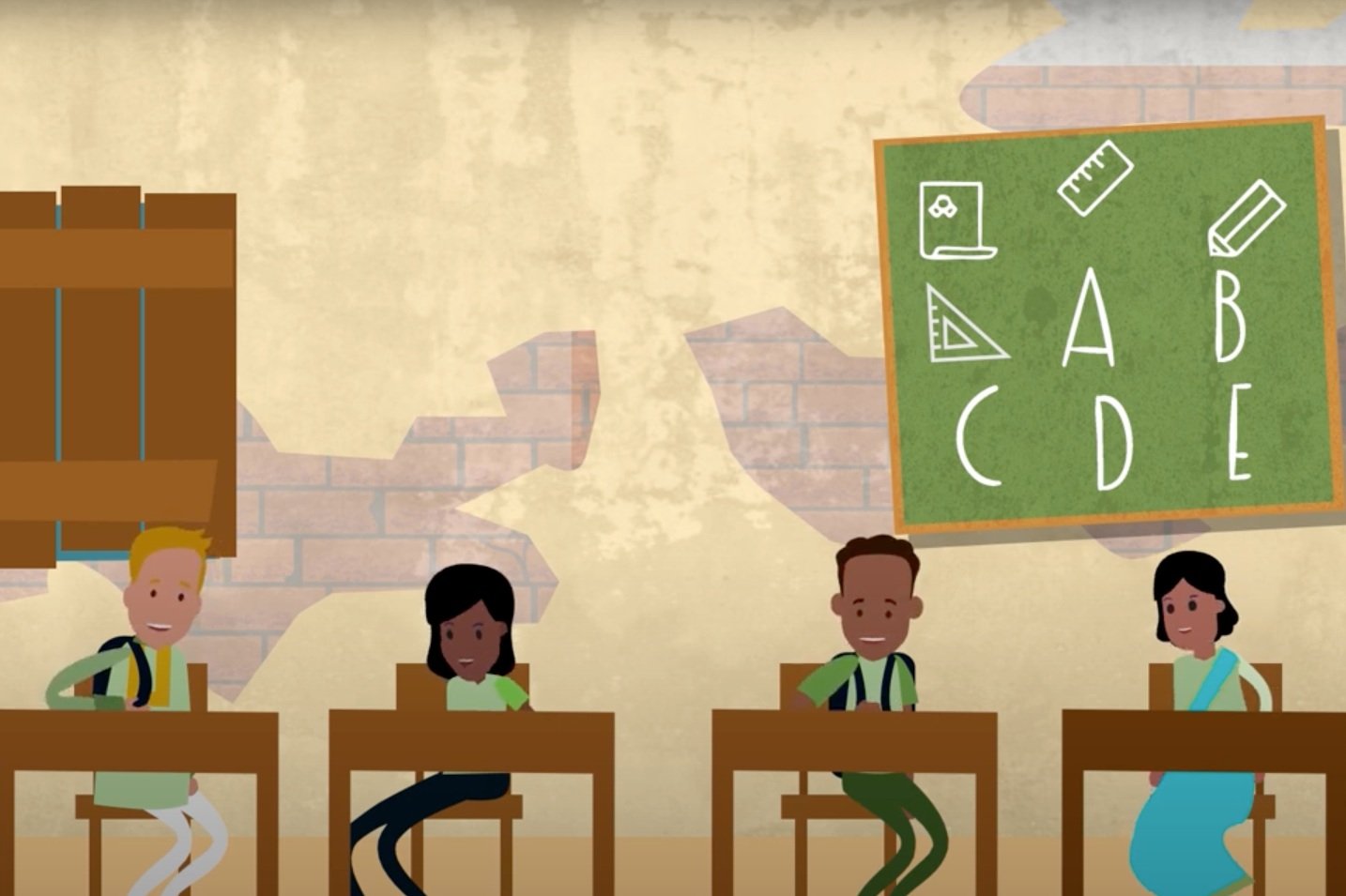
الوصف: يركز هذا الفيديو التوضيحي على "إنشاء الأبحاث": الدروس المستفادة والنصائح العملية للباحثين وأصحاب المهنة لتوجيه المجال نحو إنشاء الأبحاث. للمزيد من المعلومات حول هذا العمل، اقرأ هنا: https://www.cambridge.org/core/journa..
Cette vidéo explicative est axée sur « Construire une science pour l'action » : leçons tirées et conseils pratiques pour les chercheurs et les praticiens afin de faire avancer le domaine de l’éducation vers la construction d'une science pour l'action.
This explainer video is focused on “Building a Science for Action”: Lessons learned and practical advice for researchers and practitioners to move the field towards building science for action. The 3EA initiative, born out of a research-practice partnership between TIES and the International Rescue Committee, aims to generate evidence and tools on what works to improve children’s holistic learning and development. This work also aims to improve the quality of program implementation and to answer the questions of what works, how, for whom, and under what conditions.

Few of us were prepared to take on the role of teacher in the wake of COVID-19 school closures – one we often take for granted. Indeed, if this past year has taught us anything, it should be the value of student contact with a teacher at school. Research confirms that teachers are the most important school-based factor in student learning, and their effects can be detected well into adulthood. But while we expect teachers to don the hats of social worker, psychologist, and mentor, among others, we collectively do little to support them in their work. This is especially true in developing countries, where teachers are often embedded in and products of a struggling educational system that cannot or does not adequately support them. As millions of children return to schools in the wake of the COVID-19 pandemic, we have a moral obligation to support the well-being of teachers and, by extension, a healthier classroom culture. An investment in social-emotional learning (SEL) can help.

The original Response to Stress Questionnaire (RSQ: Connor-Smith et al., 2000) was designed to capture the ways that individuals react to and cope with specific sources of stress, including parental depression, family conflict, and academic stressors. In order to assess refugee children’s stress experiences and stress responses in Lebanese public school settings, researchers adapted the child self-report version of the RSQ-Academic Problems (RSQ-AP). It includes two subscales intended to assess: (a) academic problems stress and (b) involuntary engagement response to stress.

This paper critically reviews the opportunities and challenges in designing and conducting actionable research on the learning and development of children in conflict- and crisis-affected countries.

This paper critically reviews the opportunities and challenges in designing and conducting actionable research on the learning and development of children in conflict- and crisis-affected countries. We approached our review through two perspectives championed by Edward Zigler: (a) child development and social policy and (b) developmental psychopathology in context. The aim of the work was to answer the following questions: What works to enhance children's learning and development in such contexts? By what mechanisms? For whom? Under what conditions? How do experiences and conditions of crisis affect the basic processes of children's typical development? The review is based on a research–practice partnership started in the Democratic Republic of the Congo in 2010 and expanded to research in Niger and Lebanon in 2016. The focus of the research is on the impact of Healing Classrooms (a set of classroom practices) and Healing Classrooms Plus (an additional set of targeted social and emotional learning activities), developed by the International Rescue Committee, on children's academic outcomes and social and emotional learning. We sought to extract lessons from this decade of research for building a global developmental science for action. Special attention is paid to the importance of research–practice partnerships, conceptual frameworks, measurement and methodology. We conclude by highlighting several essential features of a global developmental science for action.

The Self-Regulation Assessment-Assessor Report (SRA-AR) is a measurement tool used to capture assessors’ perceptions of children’s skills at regulating their behavior during an assessment. The SRA-AR was developed based on the Preschool Self-Regulation Assessment-Assessor Report (PSRA-AR) (Smith-Donald et al., 2007). The developers tested this measurement tool in Lebanon.

The Child-Friendly School Questionnaire for Syrian Children in Lebanon (CFSQ-SL) is a self-report survey that was used to capture primary-school aged Syrian refugee students’ perceptions of the climate of Lebanese public schools. CFSQ-SL was adapted and shortened from the original CFSQ developed by UNICEF.

By the start of 2018, 25 million refugees fled across international borders to seek protection. Over half of these refugees are under the age of 18. Little rigorous evidence exists on strategies to promote refugee children’s academic learning and socio-emotional development. What role can universities play in helping to close this critical gap in evidence? This panel describes the state of education for refugee children broadly, zeros in on the conditions of refugee children in Lebanon and Niger, and summarizes insights evaluating innovative strategies to promote the academic learning and social-emotional development of the children.

Now in its fourth year, the E-Cubed Research Fund has funded 12 studies and is beginning to see the outputs of this research. This panel will provide an opportunity for a selection of E-Cubed grantees to share their emerging research findings. In addition, this panel will open up discussion on key questions such as who drives the production of knowledge in EiE, how and for whom. In the push for evidence-based policy and programming, this panel will provide a space to ask whether we are tending more towards policy-based evidence. Finally, this panel will give panelists and the audience a space to reflect on what evidence is needed for EiE. Beyond, “what works” what types of evidence and along what lines of inquiry should be prioritized.

Refugee children face significant adversities that can threaten critical developmental processes and hamper learning outcomes. This study examines how post-migration risk factors at the community, household, and individual level experienced by primary school-aged Syrian refugee children in Lebanon (N = 448, Age M = 9.08, SD = 1.90) are associated with cognitive, emotional, and behavioral developmental processes as well as literacy and numeracy performance. We identified several risk factors, including attending a lower grade than their age-expected grade level, that uniquely predict Syrian refugee children's developmental processes and academic outcomes. Children's executive function and behavioral regulation, but not internalizing symptoms, partially mediated the relations between risk factors and academic outcomes.

