

Early Childhood

Overview
Global TIES for Children’s work on early childhood builds on the foundations of the Millennium Development Goals - which demanded a global focus on increasing child survival rates - and the Sustainable Development Goals - which extended this focus to include the rights of all children not just to survive, but to thrive. The early childhood projects at Global TIES aim to advance a culturally-grounded, robust science for children in their first eight years, starting at conception, who are living in contexts of crisis or conflict, with the aim to ultimately contribute to improving child outcomes.
-
For young children to truly thrive, they need to be supported by an ecosystem of parents, caregivers, teachers, programs, interventions, and policies that focus on their specific developmental needs. Such programs, interventions, and policies - including those that support parents, caregivers, and teachers - need to be grounded in evidence that is contextually-sensitive, inclusive of targeted beneficiaries, and rigorous in its application.
As such, our work in this area aims to:
Contribute to a robust and culturally-grounded science in the field of early childhood development
Employ multi-method and participatory research approaches, engaging in mutual capacity building with our partners
Conduct work on innovative programming, including multi-generational and lifespan approaches that integrate early childhood with adolescent and adult development
Advocate for evidence-based policy and practice using a range of communications and engagement strategies
Create global public goods in the areas of measurement with the aim of systems improvement at scale to enhance early childhood development
Early Childhood Projects
![Haiti Remote and Hybrid Early Learning Program for Conflict-Affected Families [2025-2026]](https://images.squarespace-cdn.com/content/v1/5fa0560c3a27c834f6a6b5ac/1783443617143-X4537BC75WLRGQMKHS89/Cropped+FLYER+-+Copy.jpg)
The Haiti Remote and Hybrid Early Learning Program builds on a Middle East remote early learning program to respond to ongoing insecurity and limited access to early childhood education.
![Engage [2018-2026]](https://images.squarespace-cdn.com/content/v1/5fa0560c3a27c834f6a6b5ac/1753994640944-54OQSTB3WGF3JEFUZ9AO/TIES+and+RTI+launch+the+first+of+several+Engage+tools.jpg)
The Engage project develops and validates tools to measure how adults support children’s learning through play across homes, schools, and diverse global contexts.

Global TIES and icddr,b study caregivers and children in Rohingya and host communities to assess early-life impacts of war and displacement on development.
![Play to Learn [2018-2025]](https://images.squarespace-cdn.com/content/v1/5fa0560c3a27c834f6a6b5ac/1754074705612-JHGZ4SPGCVA2CHMS1Z3A/Play+with+a+Purpose+Event+Jan+2025.jpg)
Play to Learn united Global TIES, LEGO, Sesame Workshop, BRAC, and IRC to bring play-based early learning to children and caregivers affected by global crises.
![Ahlan Simsim [2019-2023]](https://images.squarespace-cdn.com/content/v1/5fa0560c3a27c834f6a6b5ac/2b2adc40-ac1c-40f1-a862-18c6b8b69ce3/GRP-p043-AS.jpg)
Ahlan Simsim, created by Sesame Workshop and the IRC, delivered early learning and care to children affected by conflict across the Middle East, transforming crisis response.
![Quality Preschools for Ghana (QP4G) [2015-2019]</span>](https://images.squarespace-cdn.com/content/v1/5fa0560c3a27c834f6a6b5ac/1677527046858-Q8NJBU5T0EGLDJ28NY8Z/Screenshot%2B2022-03-08%2Bat%2B11.19.59.jpg)
This project involved developing, testing and scaling-up supply and demand-side interventions to improve Kindergarten educational quality in Ghana.
Featured News & Publications

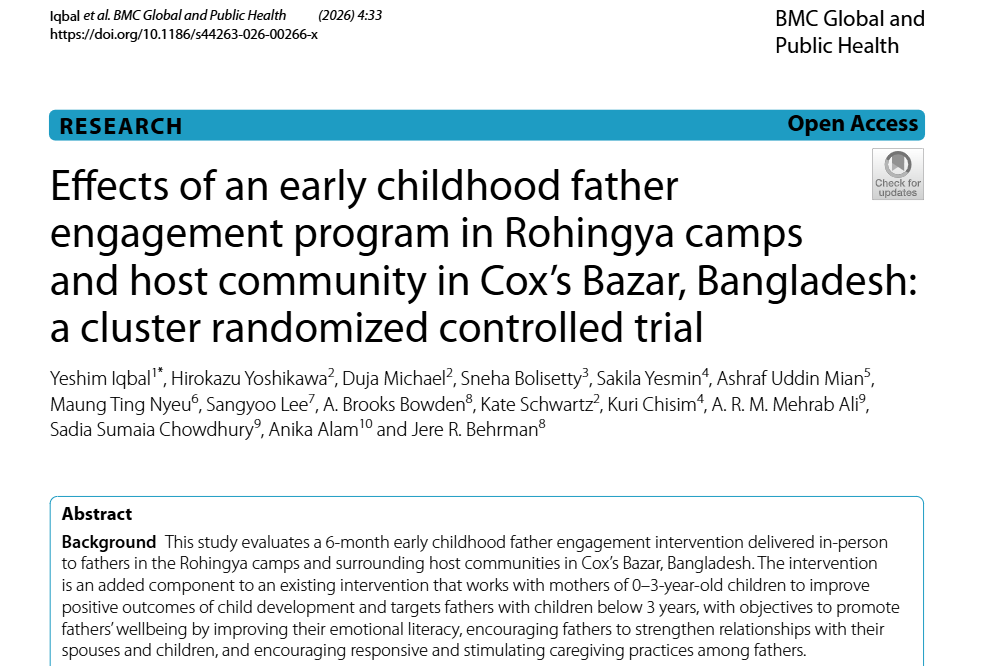
We’re pleased to share a recently released journal article on our study about father engagement and early childhood development in humanitarian settings, based on work in the Rohingya camps in Cox’s Bazar, Bangladesh.
This study examined how fathers interact with their young children in contexts of displacement and what happens when programs intentionally include them in parenting support.
Key findings include:
Increased father engagement in play and interactions with young children
Shifts in caregiving practices, including more responsive and supportive behaviors
Reductions in harsh child discipline among participating fathers
Evidence that fathers - often overlooked in ECD programming - can be meaningfully reached and engaged, even in highly constrained settings
Taken together, the results reinforce a point that still hasn’t fully translated into programming at scale: fathers matter - not just as secondary caregivers, but as central actors in children’s development.
They also point to something more pragmatic: targeted, relatively low-cost interventions can shift parenting behaviors, even in complex humanitarian environments.
At a time when resources are tightening across the aid sector, that’s not a trivial finding; it has real implications for how programs are designed and prioritized.
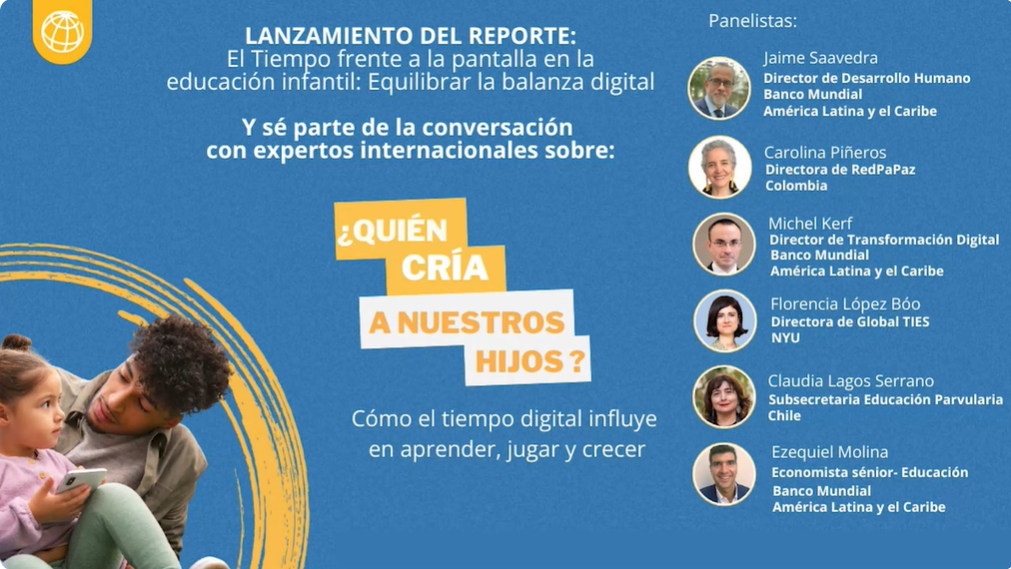
On January 9, 2026, our Director, Florencia Lopez Boo, joined a World Bank panel discussion “Quién cría a nuestros hijos, cómo el tiempo digital influye en aprender, jugar y crecer” as part of their broader initiative on early childhood education and digital environments, aiming to ground public debate and policy decisions in research rather than fear, hype, or one-size-fits-all prescriptions. Florencia Lopez Boo contributed an evidence-based perspective on young children’s learning and development in increasingly digital contexts.
The event convened researchers and policy leaders to examine how digital exposure is reshaping early childhood at home, in education systems, and across broader care environments in Latin America and the Caribbean.
The recording of the webinar “Quién cría a nuestros hijos, cómo el tiempo digital influye en aprender, jugar y crecer,” organized by The World Bank, is now available online.
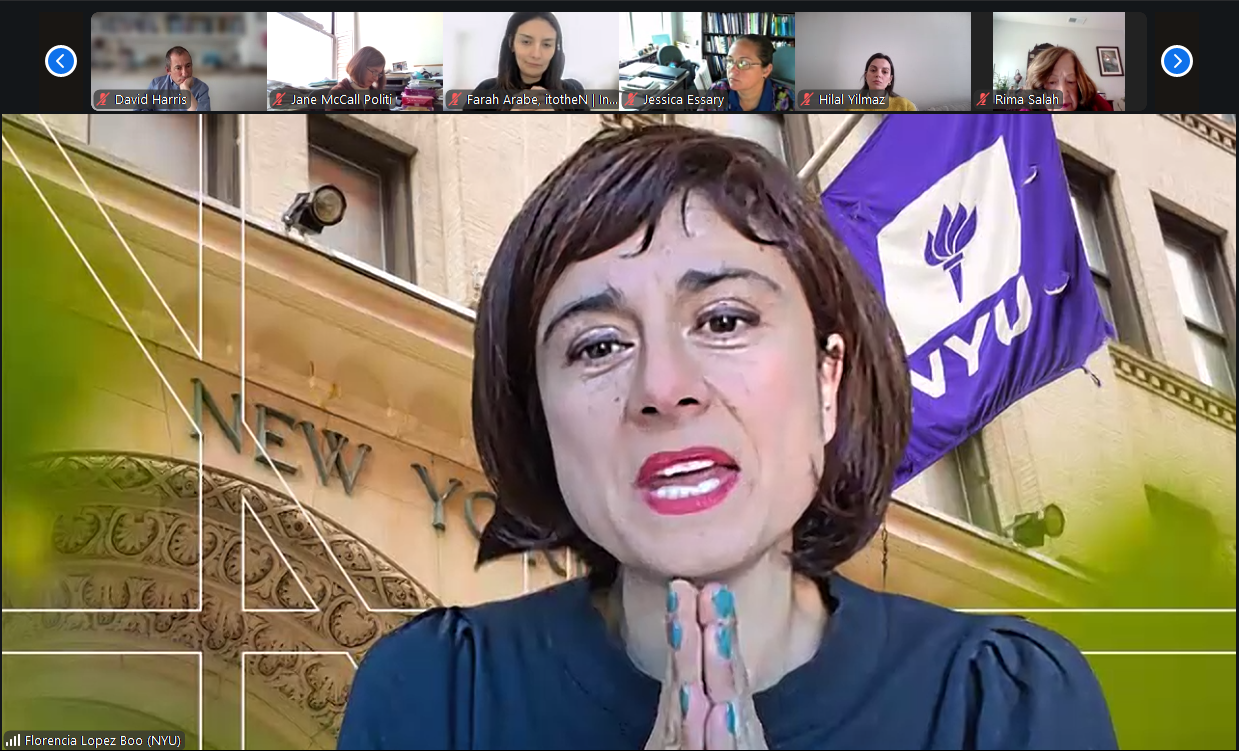
On February 5, 2026 Florencia Lopez Boo, Director of Global TIES for Children, spoke on a virtual panel convened as an official side event of the 64th Session of the UN Commission for Social Development.
The discussion focused on how integrated social protection and early childhood care and education can better safeguard children’s rights and support more just and resilient societies, particularly in contexts of crisis and displacement. Florencia shared experiences from a collaboration between Global TIES for Children, GHESKIO, and IDB to pilot an adaptation of a remote early learning program for children in Haiti, whose school is often disrupted because of political violence and unrest.
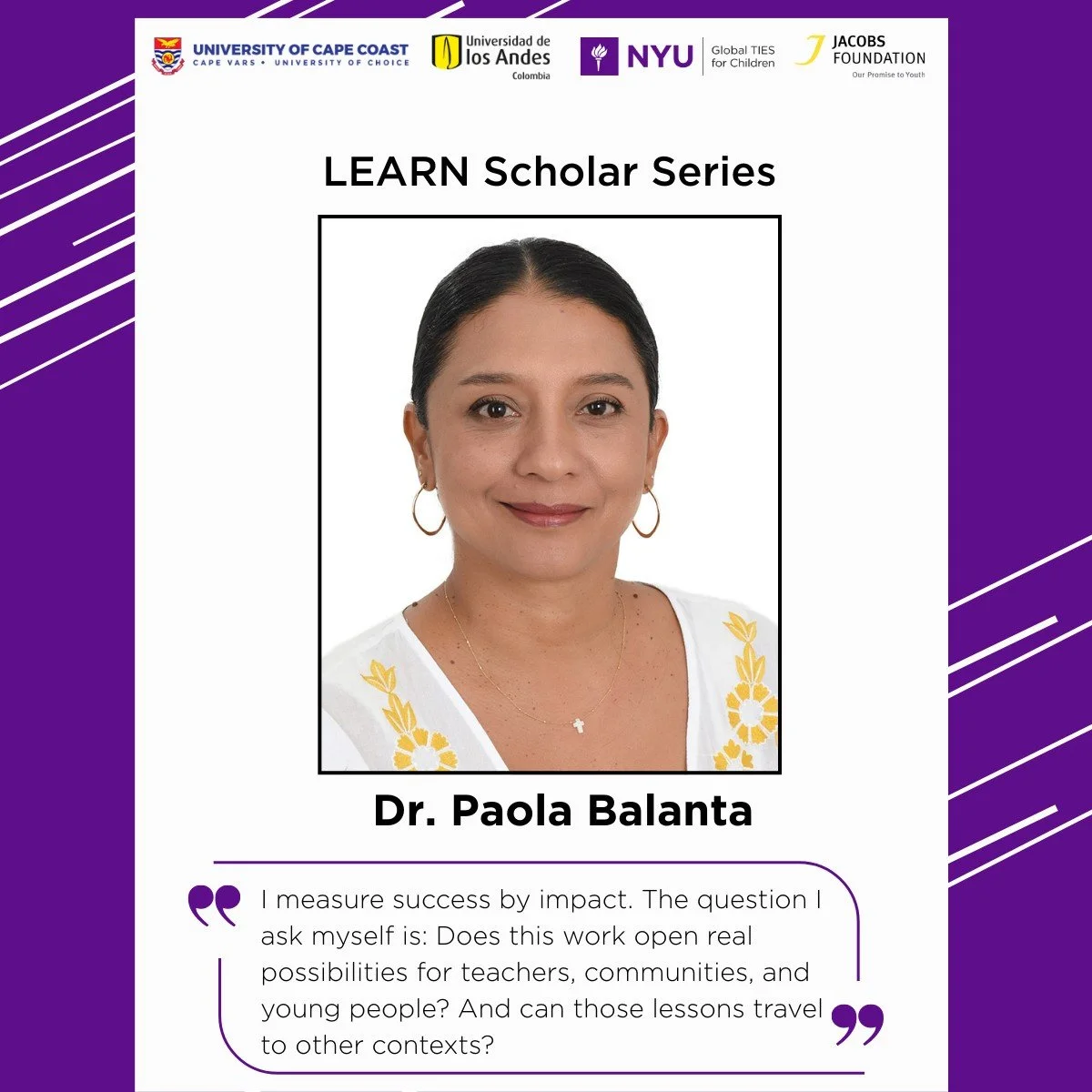
Over the coming months, we’ll be sharing short profiles of the 20 scholars participating in LEARN, a global community of researchers and practitioners working at the intersection of early childhood development, systems change, and social justice. Every two weeks, we’ll spotlight one scholar’s path, questions, and work on the ground.
We’re pleased to kick off the series with Paola Balanta Cobo Mag. Psic - PhD, a Senior Interdisciplinary Researcher in Human Development, Education, and Rights and the field leader for the JUNTOS por la Prioridad Program in Colombia, a collaborative initiative focused on strengthening care systems and positioning early childhood development as a national and local priority.
Paola’s path into research was intentional and deeply rooted in lived experience. From an early age, she worked alongside families, children, and young people in communities shaped by inequality and armed conflict. Those experiences continue to inform the questions that drive her work today: how agency, resilience, and creativity are nurtured in vulnerable contexts.
Her research is intergenerational in nature and strongly emphasizes the promotion of exchange between youth, early childhood, and the pedagogical practices that exist at the intersection of institutional contexts. It sits at the intersection of psychology, education, and social justice - transforming everyday care and creativity into eco-pedagogies and community initiatives grounded in local resources, intergenerational relationships, and emotional co-regulation.
In our conversation, Paola reflects on how these early experiences shaped her research agenda and how they continue to guide her commitment to early childhood development and systems-level change.
Research on father engagement is heavily focused on Western families. Western-based programs to support fathers often do so in an individualistic manner, failing to address cultures in places where collective care is common. Limited existing research on fathers’ involvement in play emphasizes the influence of income and working status on fathers’ views on play. Overall, there is very little research on fathers' perceptions of play in refugee contexts, and there is no extensive study exploring this topic in the Rohingya context. In this context of forced displacement, we ask the following research question about the Rohingya fathers' perceptions of play.
Research Question:
How do fathers perceive children’s play in both structured (Humanitarian Play Labs) as well as unstructured (home and surrounding areas) play settings in the Rohingya camps in Cox’s Bazar, Bangladesh?
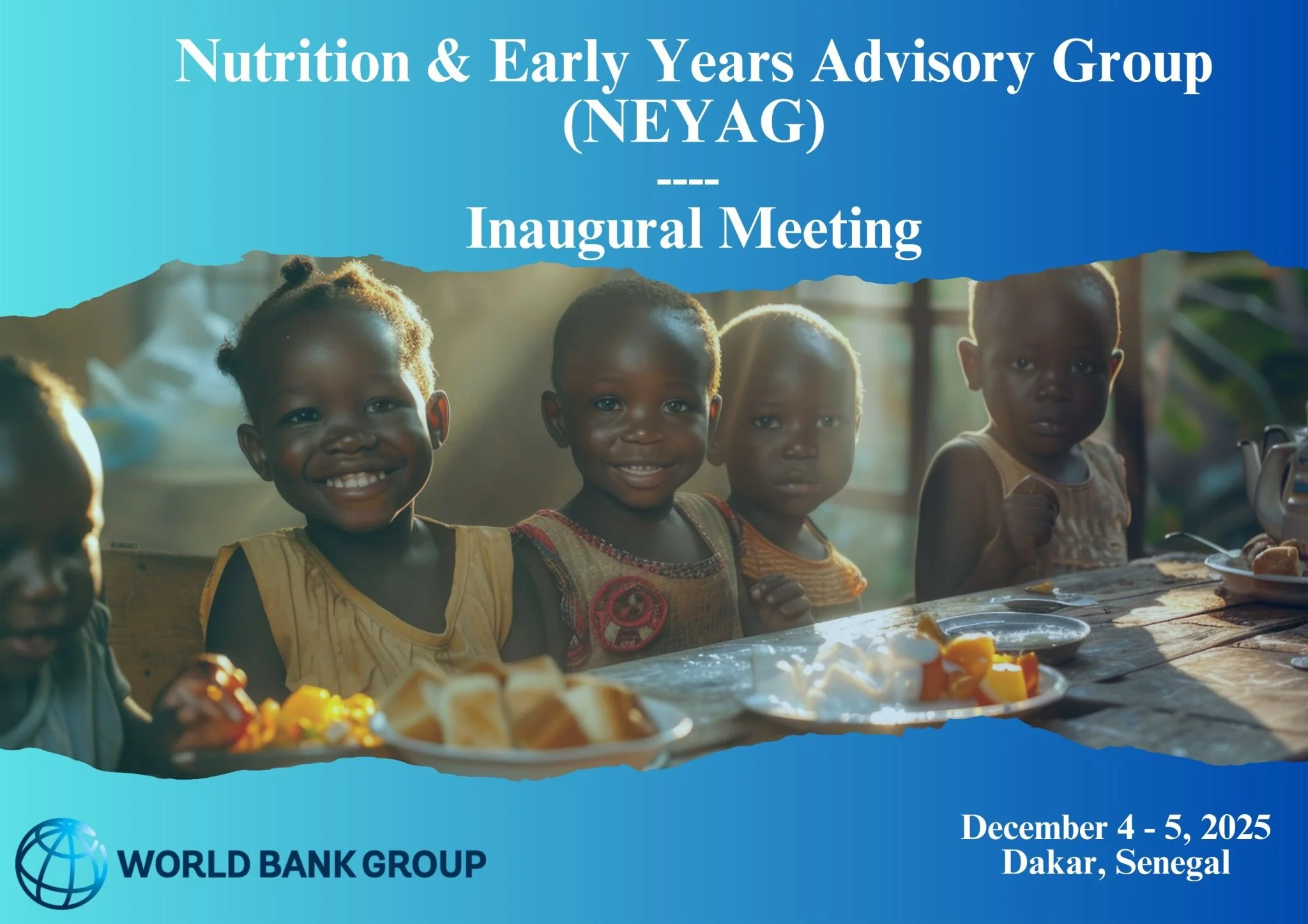
Congratulations to all those involved in launching the Nutrition & Early Years Advisory Group (NEYAG), which was inaugurated on December 4, 2025 at a meeting titled: “Shaping the Future of Africa: Nutrition and Early Childhood Development as Game Changers.”
Hosted in Dakar by the World Bank and partners, the meeting brought together leaders across sectors to advance strategies that strengthen human capital through improved nutrition and early childhood development.
At the event today, our Director, Florencia Lopez Boo, shared insights from Global TIES for Children’s research portfolio on how to integrate health, nutrition, and child development policies, highlighting evidence on what policy environment is needed to enable such integration and what governance structures and regulations can inform impactful, scalable policies across the continent.

The award recognizes his pioneering research on the ways public policies and programs, particularly in early childhood and immigration, shape human development.
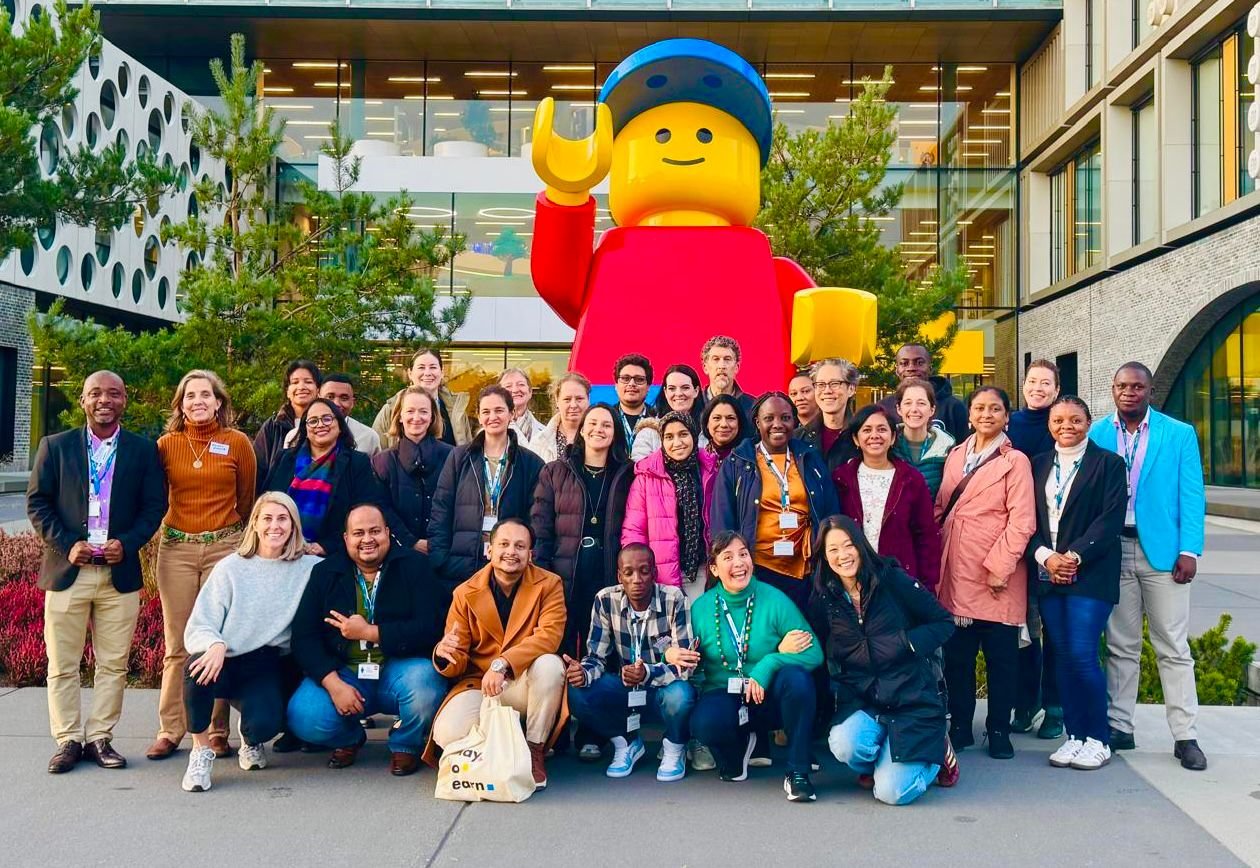
From November 3-6, 2025, Hirokazu Yoshikawa and Sharon Kim represented Global TIES for Children at the final Engage Community of Practice convening, organized by EDC and hosted at the LEGO Foundation headquarters in Billund, Denmark.
Over three days, partners from across the Engage portfolio shared evidence and lessons on strengthening student engagement in early childhood and primary education across diverse contexts.
The sessions focused on:
Insights from implementing and adapting the Engage tools
Trends emerging across countries and developmental levels
How data can drive program improvement and system-level change
This convening wasn’t a “show-and-tell.” It was hands-on, reflective, and honest about what it takes to embed child-centered, playful learning approaches into teaching and learning systems—and sustain them.

We’re excited to share that we kicked off training for the pilot phase of our iRRRd study on October 5, together with our partners at icddr,b and University of California, Davis. Over the next three months, we will test new measures for the next wave of data collection with Rohingya refugee families living in the southeast of Bangladesh.
This wave — following children in our study cohort as they reach three years of age — has been made possible by a $𝟯 𝗺𝗶𝗹𝗹𝗶𝗼𝗻 𝗴𝗿𝗮𝗻𝘁 𝗳𝗿𝗼𝗺 The LEGO Foundation.
“This pilot is a critical step to make sure our tools capture the unique realities of Rohingya and host community families,” said Fahmida Tofail, co-Principal Investigator and Scientist at icddr,b. “We are eager to generate insights that can inform both science and policy.”
“Having the chance to follow children into toddlerhood is an extraordinary opportunity,” added Alice Wuermli, Principal Investigator for iRRRd and Director of Research & Innovation at NYU Global TIES for Children. “It allows us to investigate the mechanisms — from the molecular to the social — of how pre- and postnatal environments affect early development.”
𝗪𝗲 𝗮𝗿𝗲 𝗱𝗲𝗲𝗽𝗹𝘆 𝗴𝗿𝗮𝘁𝗲𝗳𝘂𝗹 𝘁𝗼 𝘁𝗵𝗲 𝗟𝗘𝗚𝗢 𝗙𝗼𝘂𝗻𝗱𝗮𝘁𝗶𝗼𝗻, 𝗶𝗰𝗱𝗱𝗿,𝗯, 𝗨𝗖 𝗗𝗮𝘃𝗶𝘀, 𝗮𝗻𝗱 𝗮𝗯𝗼𝘃𝗲 𝗮𝗹𝗹, 𝘁𝗼 𝘁𝗵𝗲 𝗳𝗮𝗺𝗶𝗹𝗶𝗲𝘀 𝘄𝗵𝗼 𝗺𝗮𝗸𝗲 𝘁𝗵𝗶𝘀 𝘄𝗼𝗿𝗸 𝗽𝗼𝘀𝘀𝗶𝗯𝗹𝗲.

Gaps in child development by socio-economic status (SES) start early in life, are large and can increase inequalities later in life. We use recent national-level, cross-sectional and longitudinal data to examine inequalities in child development (namely, language, cognition and socio-emotional skills) of children 0–5 in five Latin American countries (Chile, Colombia, Mexico, Peru and Uruguay). In the cross-section analysis, we find statistically significant gaps with inequality patterns that widely differ across countries. For instance, gaps in language and cognition for Uruguay and Chile are much smaller than those for Colombia and Peru. When turning to the longitudinal data, average SES gaps are similar to those of the cross-section in language but differ substantially in cognition, mainly in Uruguay where they emerge as more unequal when cohort effects do not operate. Importantly, we also find that the ECD gaps found at early ages (0–5) still manifest 6–12 years later in almost all locations and realms in which we have measures of early child development, but they do not increase with age. Results are robust to using different measures of inequality (income and maternal education). Gaps are smaller but generally remain when adjusting for possible explanatory factors (e.g. family structure, parental education, geographic fixed effects). To reduce ECD inequality and promote equality in later life outcomes, policymakers should look to implementing evidence-based interventions at scale to improve developmental outcomes of the most disadvantaged children in society.

Florencia Lopez Boo had the honor of delivering a keynote on “Investing Better in Child Development Policies, ”sharing reflections on how we can improve the design and delivery of impactful programs at scale.

Florencia Lopez Boo had the honor of delivering a keynote on “Investing Better in Child Development Policies,”sharing reflections on how we can improve the design and delivery of impactful programs at scale.
We were also proud to present our poster on hybrid modalities of parenting programs from Jamaica, highlighting how flexible, evidence-informed models can better support families. Special thanks to Susan Walker and Fahmida Tofail for the insightful discussions.

The ECPS-CQI instrument was developed in English by Anaga Ramachandranm, Dalia Al Ogaily, Kate Schwartz, Joyce Rafla and Hirokazu Yoshikawa and used to measure the quality of interactions during a phone call with a parent or caregiver. The instrument assesses the domains of relationship with family, responsiveness to family strength, needs, and culture, facilitation of caregiver-child interaction, and active listening. The ECPS-CQI tool has shown promising evidence for reliability and validity, and with caution, it can be used for intended purposes with similar samples/contexts.


Attendees from NYU, multilateral development banks, and early childhood NGOs and foundations discussed parental support initiatives.
Housed at NYU Steinhardt, Global TIES for Children hosted a launch event for the latest edition of the Van Leer Foundation’s flagship Early Childhood Matters journal last month at the Kimmel Center.
Around 60 people attended the launch event, including representatives from around NYU, such as faculty and staff from Steinhardt and NYU Langone. Also in attendance were practitioners from the early childhood community in New York City, including the International Rescue Committee, Sesame Workshop, Save the Children, and Innovations for Poverty Action.