Launching a new LEARN blog series: Get to Know a LEARN Scholar
Over the coming months, we’ll be sharing short profiles of the 20 scholars participating in LEARN, a global community of researchers and practitioners working at the intersection of early childhood development, systems change, and social justice. Every two weeks, we’ll spotlight one scholar’s path, questions, and work on the ground.
We’re pleased to kick off the series with Paola Balanta Cobo Mag. Psic - PhD, a Senior Interdisciplinary Researcher in Human Development, Education, and Rights and the field leader for the JUNTOS por la Prioridad Program in Colombia, a collaborative initiative focused on strengthening care systems and positioning early childhood development as a national and local priority.
Paola’s path into research was intentional and deeply rooted in lived experience. From an early age, she worked alongside families, children, and young people in communities shaped by inequality and armed conflict. Those experiences continue to inform the questions that drive her work today: how agency, resilience, and creativity are nurtured in vulnerable contexts.
Her research is intergenerational in nature and strongly emphasizes the promotion of exchange between youth, early childhood, and the pedagogical practices that exist at the intersection of institutional contexts. It sits at the intersection of psychology, education, and social justice - transforming everyday care and creativity into eco-pedagogies and community initiatives grounded in local resources, intergenerational relationships, and emotional co-regulation.
In our conversation, Paola reflects on how these early experiences shaped her research agenda and how they continue to guide her commitment to early childhood development and systems-level change.
Read the full profile here: https://lnkd.in/gpdbWVB8
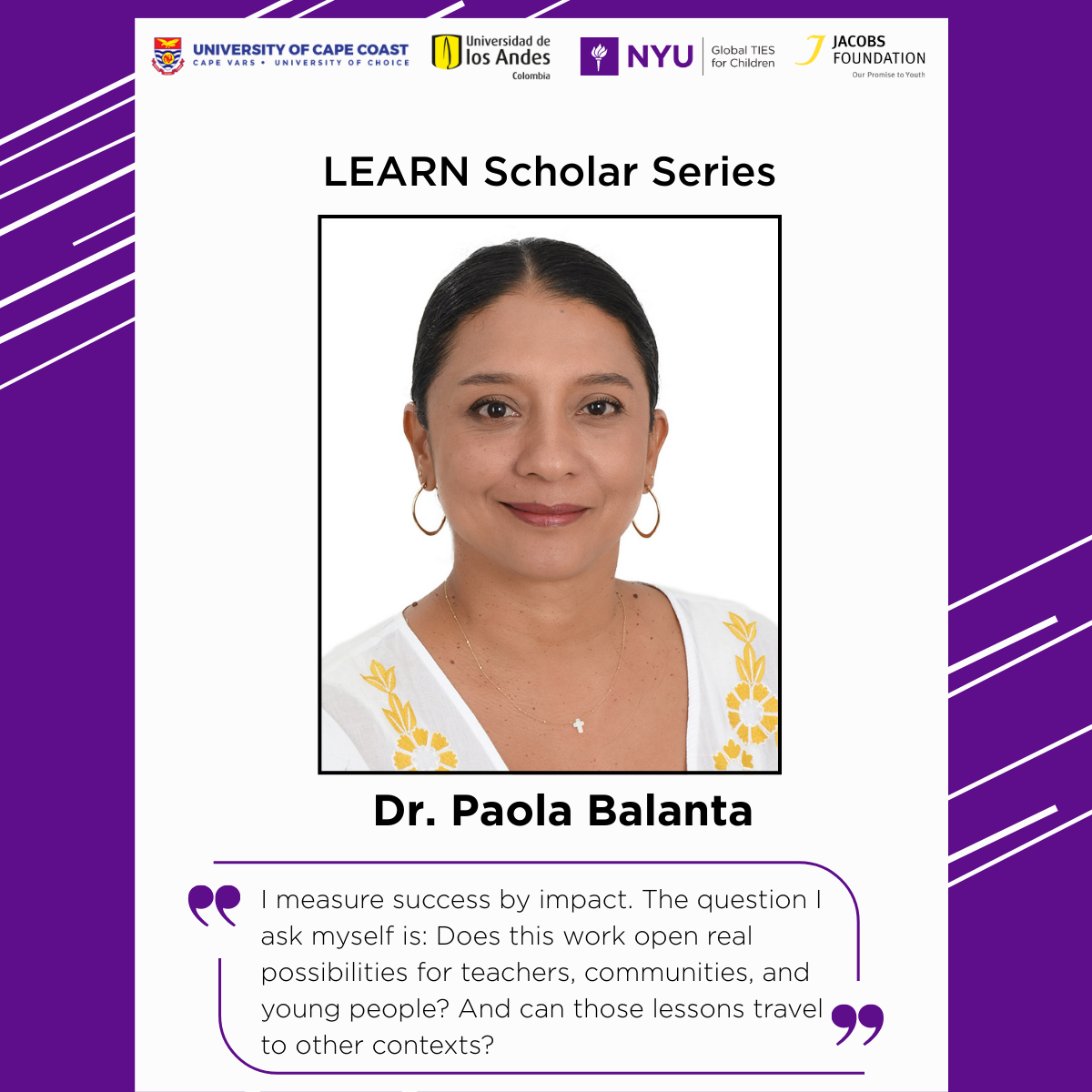
Dr. Paola Balanta