

Resources
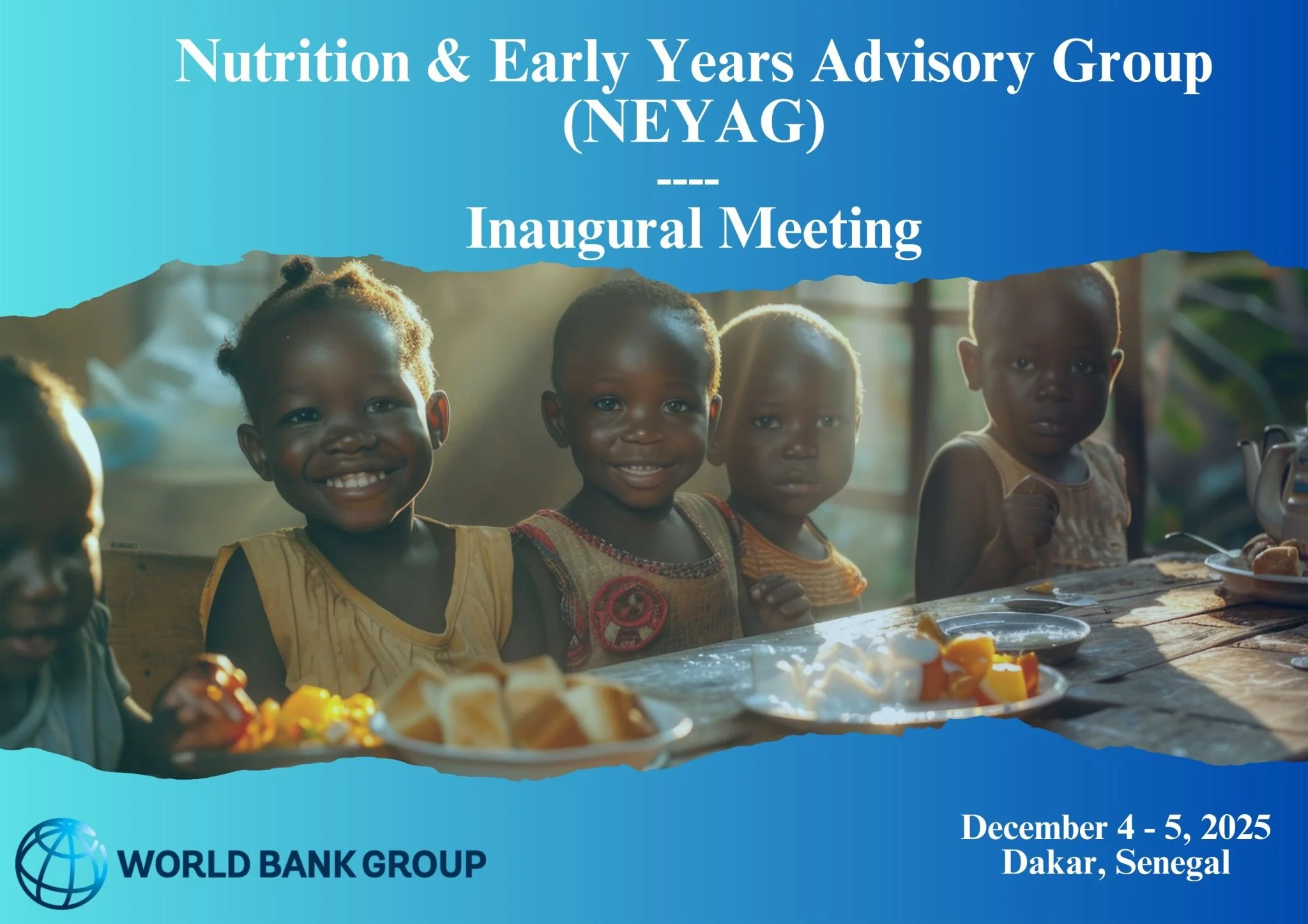
Florencia Lopez Boo presented at the Inaugural Nutrition & Early Years Advisory Group (NEYAG)
Congratulations to all those involved in launching the Nutrition & Early Years Advisory Group (NEYAG), which was inaugurated on December 4, 2025 at a meeting titled: “Shaping the Future of Africa: Nutrition and Early Childhood Development as Game Changers.”
Hosted in Dakar by the World Bank and partners, the meeting brought together leaders across sectors to advance strategies that strengthen human capital through improved nutrition and early childhood development.
At the event today, our Director, Florencia Lopez Boo, shared insights from Global TIES for Children’s research portfolio on how to integrate health, nutrition, and child development policies, highlighting evidence on what policy environment is needed to enable such integration and what governance structures and regulations can inform impactful, scalable policies across the continent.

Emotional, physical, and social needs among 0–5-year-old children displaced by the 2010 Chilean earthquake: associated characteristics and exposures
An 8.8-magnitude earthquake occurred off the coast of Chile on 27 February 2010, displacing nearly 2,000 children aged less than five years to emergency housing camps. Nine months later, this study assessed the needs of 140 displaced 0–5-year-old children in six domains: caregiver stability and protection; health; housing; nutrition; psychosocial situation; and stimulation. Multivariate regression was applied to examine the degree to which emotional, physical, and social needs were associated with baseline characteristics and exposure to the earthquake, to stressful events, and to ongoing risks in the proximal post-earthquake context. In each domain, 20 per cent or fewer children had unmet needs. Of all children in the sample, 20 per cent had unmet needs in multiple domains. Children's emotional, physical, and social needs were associated with ongoing exposures amenable to intervention, more than with baseline characteristics or epicentre proximity. Relief efforts should address multiple interrelated domains of child well-being and ongoing risks in post-disaster settings.