

Resources
Two Generations, Two Signatures: Biological Embedding of Pre-pregnancy Trauma in Mother and Infant
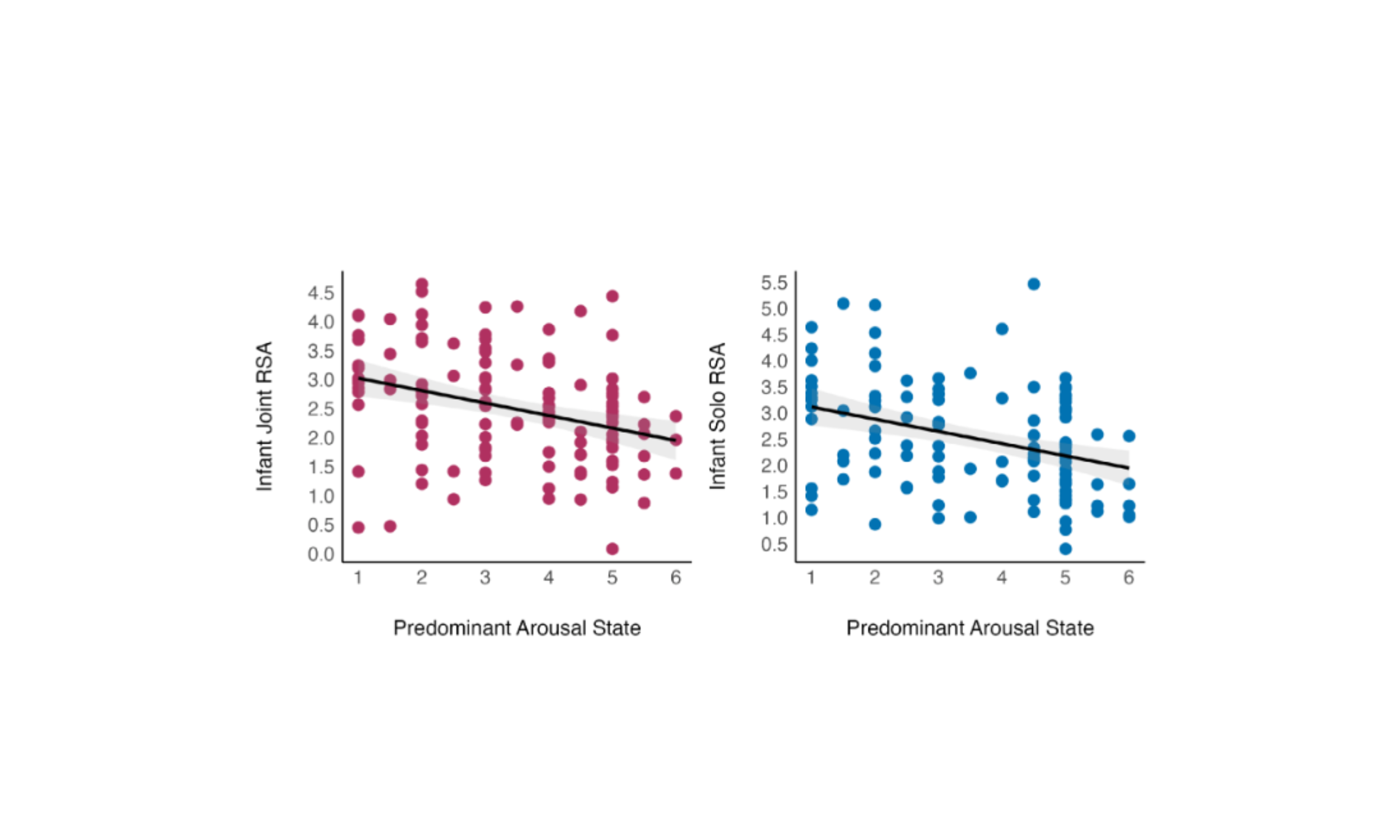
NYU Global TIES research findings were presented at ICIS 2026 on how maternal trauma may become biologically embedded in newborns.
Father Engagement Program Shows Promise in Rohingya Camps
A recent study finds that a father engagement program improves parenting, family relationships, and children's wellbeing in Rohingya camps.
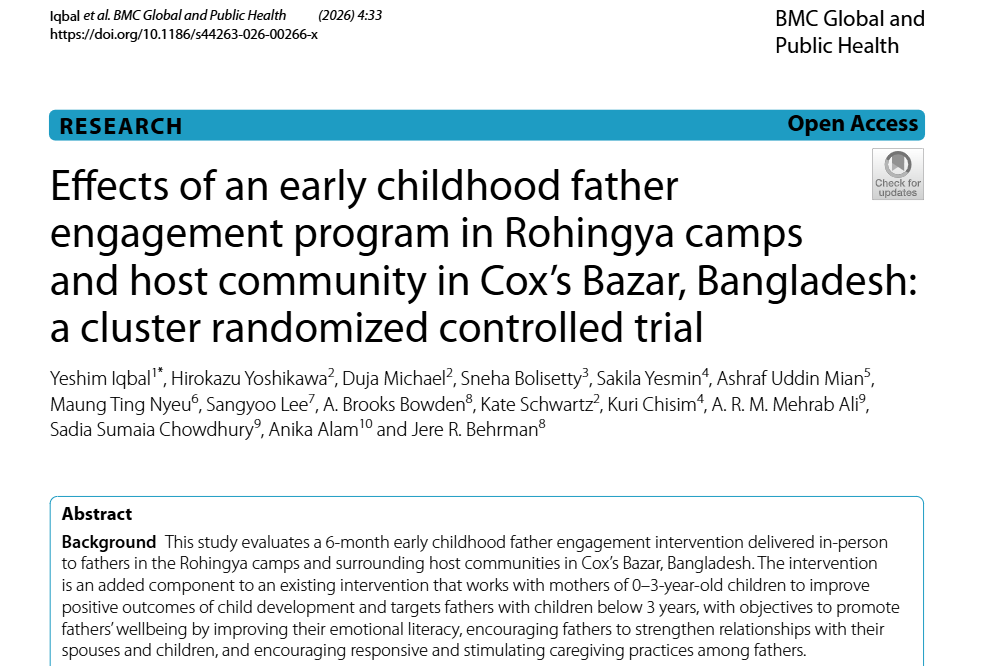
New publication on the effects of an early childhood father engagement program in Rohingya camps in Cox’s Bazar, Bangladesh
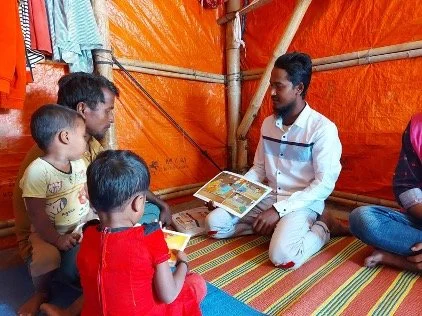
We’re pleased to share a recently released journal article on our study about father engagement and early childhood development in humanitarian settings, based on work in the Rohingya camps in Cox’s Bazar, Bangladesh.
This study examined how fathers interact with their young children in contexts of displacement and what happens when programs intentionally include them in parenting support.
Key findings include:
Increased father engagement in play and interactions with young children
Shifts in caregiving practices, including more responsive and supportive behaviors
Reductions in harsh child discipline among participating fathers
Evidence that fathers - often overlooked in ECD programming - can be meaningfully reached and engaged, even in highly constrained settings
Taken together, the results reinforce a point that still hasn’t fully translated into programming at scale: fathers matter - not just as secondary caregivers, but as central actors in children’s development.
They also point to something more pragmatic: targeted, relatively low-cost interventions can shift parenting behaviors, even in complex humanitarian environments.
At a time when resources are tightening across the aid sector, that’s not a trivial finding; it has real implications for how programs are designed and prioritized.
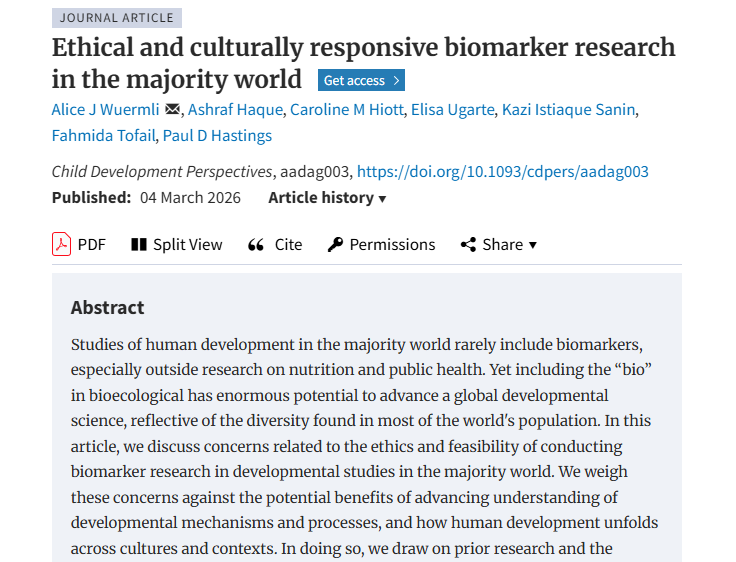
The iRRRd team has published a paper in the Child Development Perspectives Journal on ethical and culturally responsive biomarker research in the majority world
Do biomarkers have a place in human developmental research in the Majority World?
While commonly used in medicine, public health, and nutrition their application in developmental and educational science has remained contested.
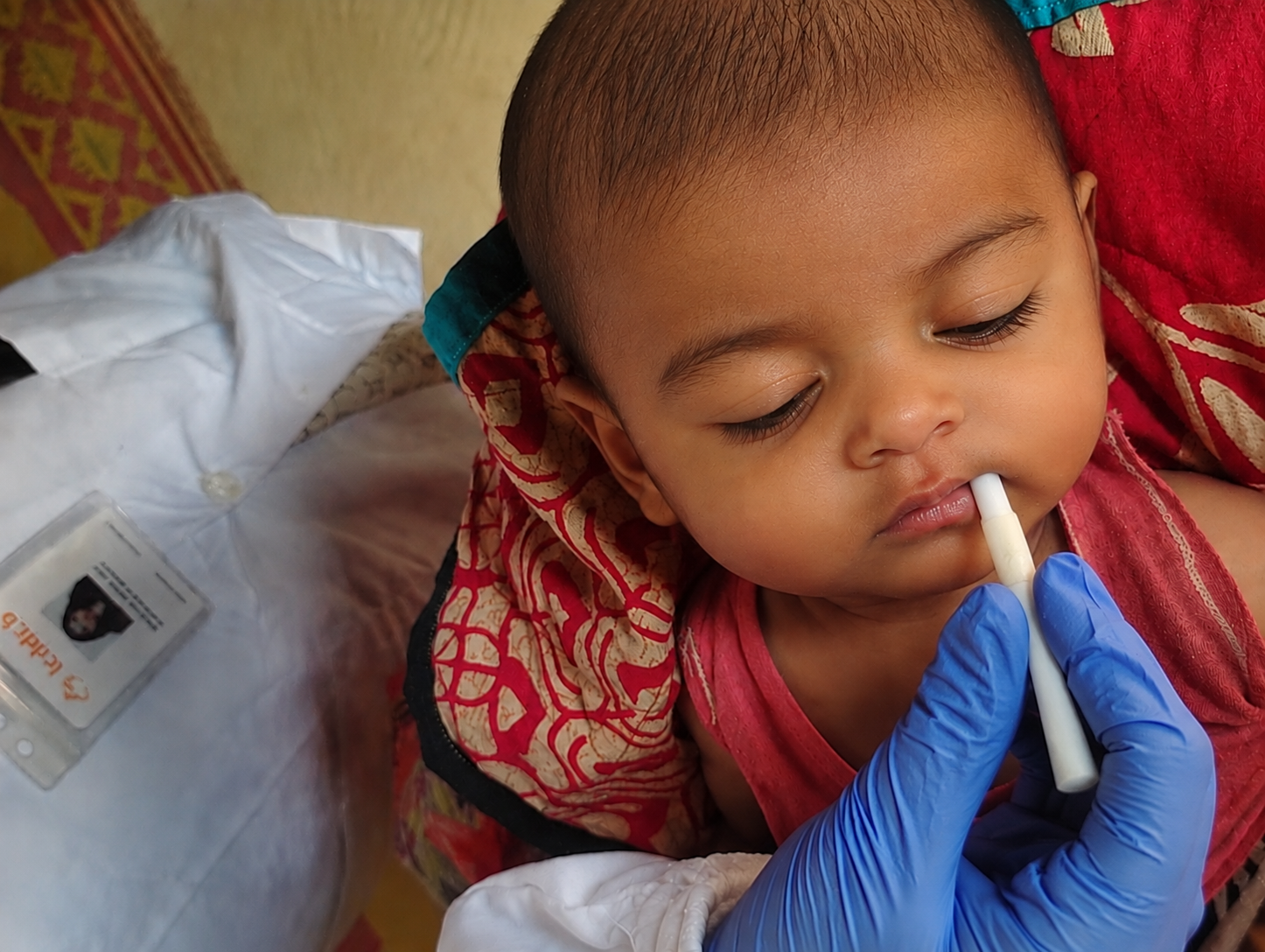
In our new paper in Child Development Perspectives, we draw on both our own work and the field’s collective experience to examine the ethical considerations and practical challenges of conducting biomarker research responsibly in low-resource and conflict-affected settings in the Majority World.
We argue that, when implemented thoughtfully, biomarkers can meaningfully complement traditional developmental measures and deepen our understanding of how adversity becomes biologically embedded. The paper offers a roadmap for integrating biomarker data into developmental science while remaining grounded in ethics and cultural context.
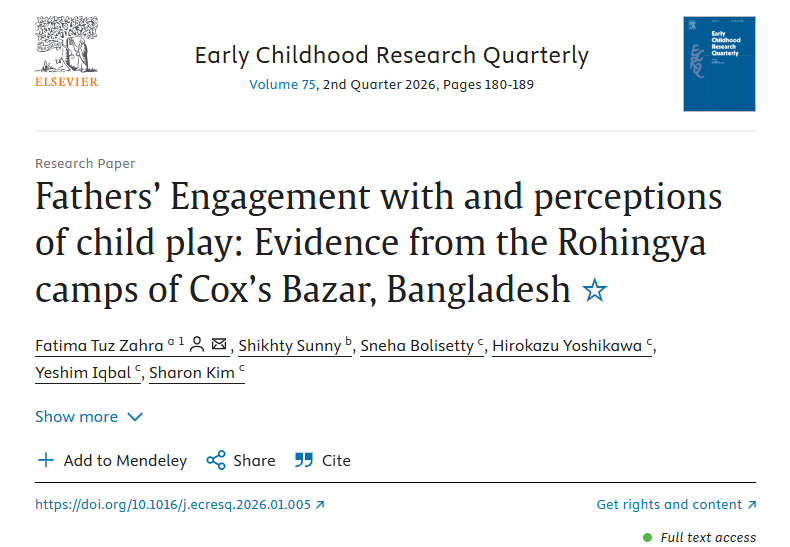
The Play to Learn team has published a paper on Fathers’ Engagement with and perceptions of child play: Evidence from the Rohingya camps
Research on father engagement is heavily focused on Western families. Western-based programs to support fathers often do so in an individualistic manner, failing to address cultures in places where collective care is common. Limited existing research on fathers’ involvement in play emphasizes the influence of income and working status on fathers’ views on play. Overall, there is very little research on fathers' perceptions of play in refugee contexts, and there is no extensive study exploring this topic in the Rohingya context. In this context of forced displacement, we ask the following research question about the Rohingya fathers' perceptions of play.
Research Question:
How do fathers perceive children’s play in both structured (Humanitarian Play Labs) as well as unstructured (home and surrounding areas) play settings in the Rohingya camps in Cox’s Bazar, Bangladesh?

World Refugee Day 2025
Millions of refugees around the world suffer in silence, not because they lack a voice, but because their pain is misunderstood or mismeasured.
On World Refugee Day, we uplift the voices and lived realities of displaced communities and call for deeper, more culturally responsive care.
At TIES, we work hard to partner with local communities and integrate methods that capture participant voices directly. For example, the paper we reshare today highlights some of the qualitative work we have done as part of the iRRRd study, led by Rohingya researchers and collaborators, to explore cultural concepts of distress (CCDs) among Rohingya refugees in Cox’s Bazar. It identifies five locally meaningful expressions of emotional suffering, like tenshon and bishi sinta, that often go unrecognized by standard mental health tools.
As we act in solidarity with refugees, we must design support systems that reflect how communities themselves understand and communicate distress.