

The Child Behind the World Cup Player: What Children Need Off the Field
Written by Florencia Lopez Boo
What the science of play tells us about what every child truly needs.
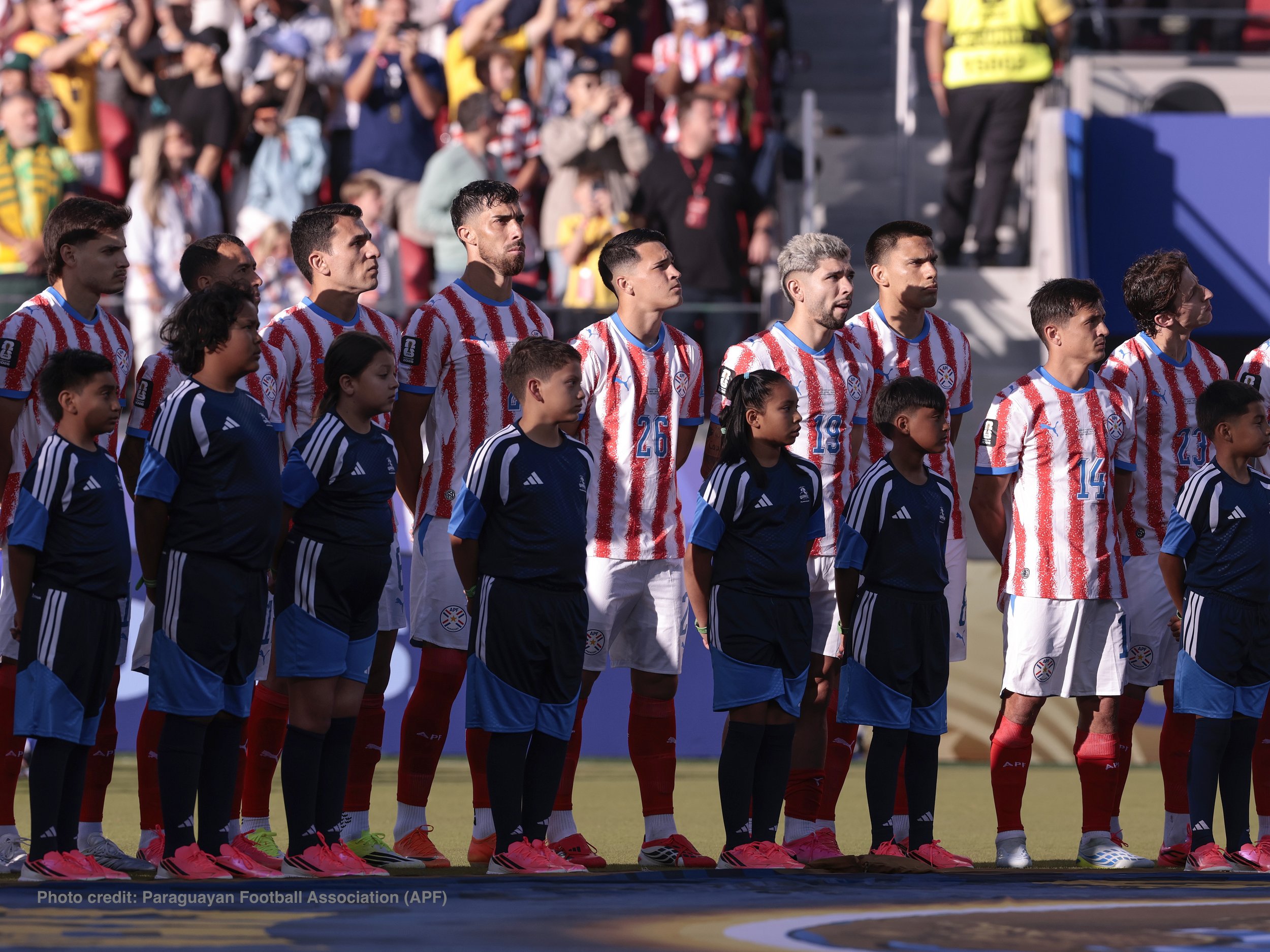
Every match at the 2026 FIFA World Cup starts the same way. A kid — chosen through community programs and FIFA-supported initiatives — walks onto the field holding the hand of a pro player. They stand side by side during the national anthems. Then the kid walks off, and the game kicks off. It all takes about ninety seconds.
For those children, that moment is a memory they'll carry for a lifetime. For the millions watching around the world, it's a symbol of hope, childhood, and what sport is really about. But for child development researchers, that image prompts a bigger question: what do children need the other 99.9% of the time?
Play = Learning
Scientists who study child development have spent decades figuring out what kids really need in those early years. The answer is simple but often overlooked: play.
Not to play as a treat after finishing homework, nor as a quick break. Play is THE medium through which young children develop the skills that shape the rest of their lives — managing emotions, developing language, cooperating with others, resolving conflicts, staying focused, and handling stress.
These aren't soft skills. They're the neurological and behavioral foundations that influence learning outcomes, health, and even economic success decades down the line. When children engage in imaginative, exploratory, or structured play, they're practicing executive function skills. They're learning to understand that other people have thoughts and feelings different from their own. In the most literal sense, they're building brains equipped to navigate a complex world.
Investing in quality early childhood programs that center around play has shown a return of about 12-13.7% annually — not just theory, but backed by decades of long-term economic research.
What Happens When Play Is Taken Away
Most kids watching the World Cup see play as a given. Parks, classrooms, caregivers, toys — the environment for healthy growth is there, even if imperfect. But for children displaced by war and crises worldwide, these conditions aren't guaranteed. They're fragile, interrupted, or completely missing. The cost? 258M School-aged children and adolescents now have their education affected by crises worldwide — not because they lack ability, but because their environments are failing them.
This is where NYU's Global TIES for Children steps in.
What The Research Actually Shows
For years, many in the field believed that delivering rigorous early childhood programs in crisis zones was too complex — too unstable, too hard to reach, too resource-heavy. But Global TIES has spent over a decade proving otherwise.
Take the example of Ahlan Simsim — an initiative by Sesame Workshop and the International Rescue Committee with Global TIES for Children serving as an independent evaluator. It was the largest early childhood intervention in humanitarian history.
A Global TIES evaluation showed that an 11-week remote learning program via WhatsApp for Syrian refugee families in Lebanon had impacts on children learning at levels comparable to a full year of in-person preschool. In Jordan, children who watched the Ahlan Simsim TV show in preschool settings showed real improvements in recognizing and managing emotions. And all this was done through randomized controlled trials — the gold standard of scientific evidence — in some of the world's most challenging environments.
Across three evaluations, this work nearly doubled the evidence showing how effective early childhood programs can be for kids affected by crises and displacement.
The takeaway isn't just that educational media can work. It's those play-based, child-focused programs — carefully designed, rigorously tested, and delivered where kids are — that can make a real difference, even in unstable settings.
From Symbol to System
Every four years, the World Cup puts kids front and center on a global stage, reminding us they matter. FIFA's initiatives, such as "Unite for Education", show the sport's power to create change beyond the pitch. And symbols need systems behind them.
The kids walking onto the field in Dallas, Miami, Toronto, or Mexico City represent millions more — children whose futures are being shaped right now, often out of sight — in camps, under-resourced schools, and vulnerable communities.
That child behind the player deserves more than ninety seconds. The research tells us exactly how to give it to them.